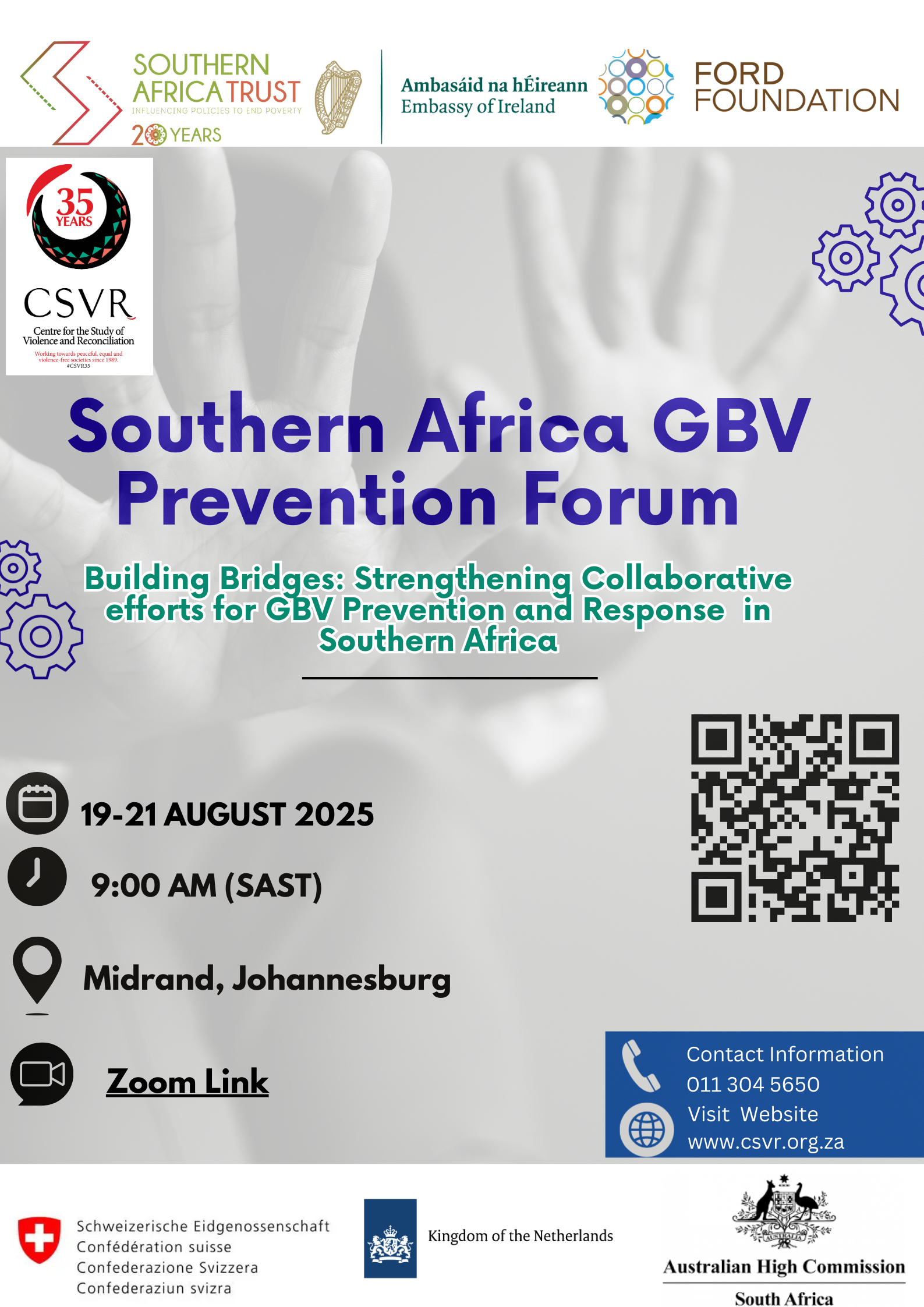

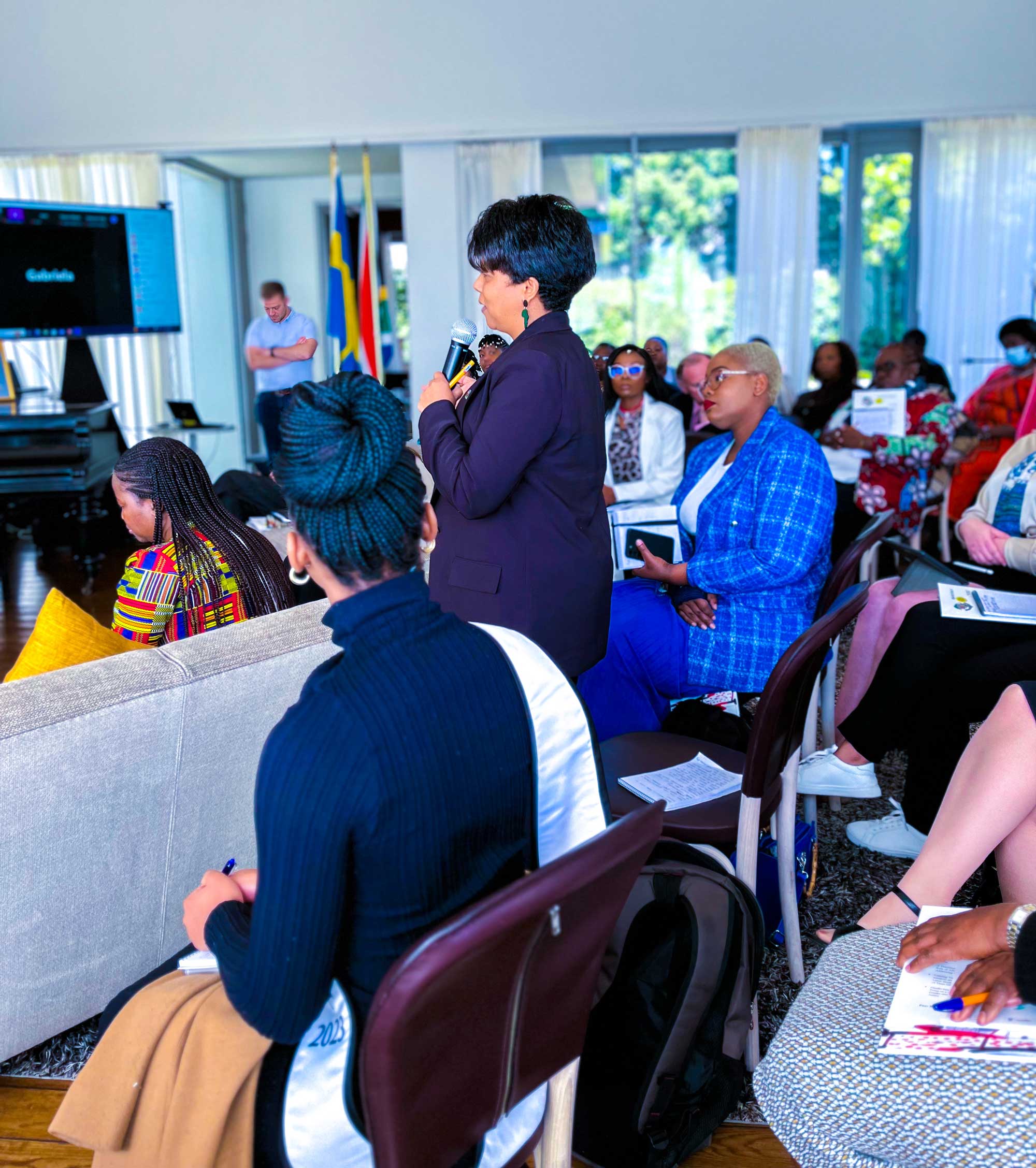
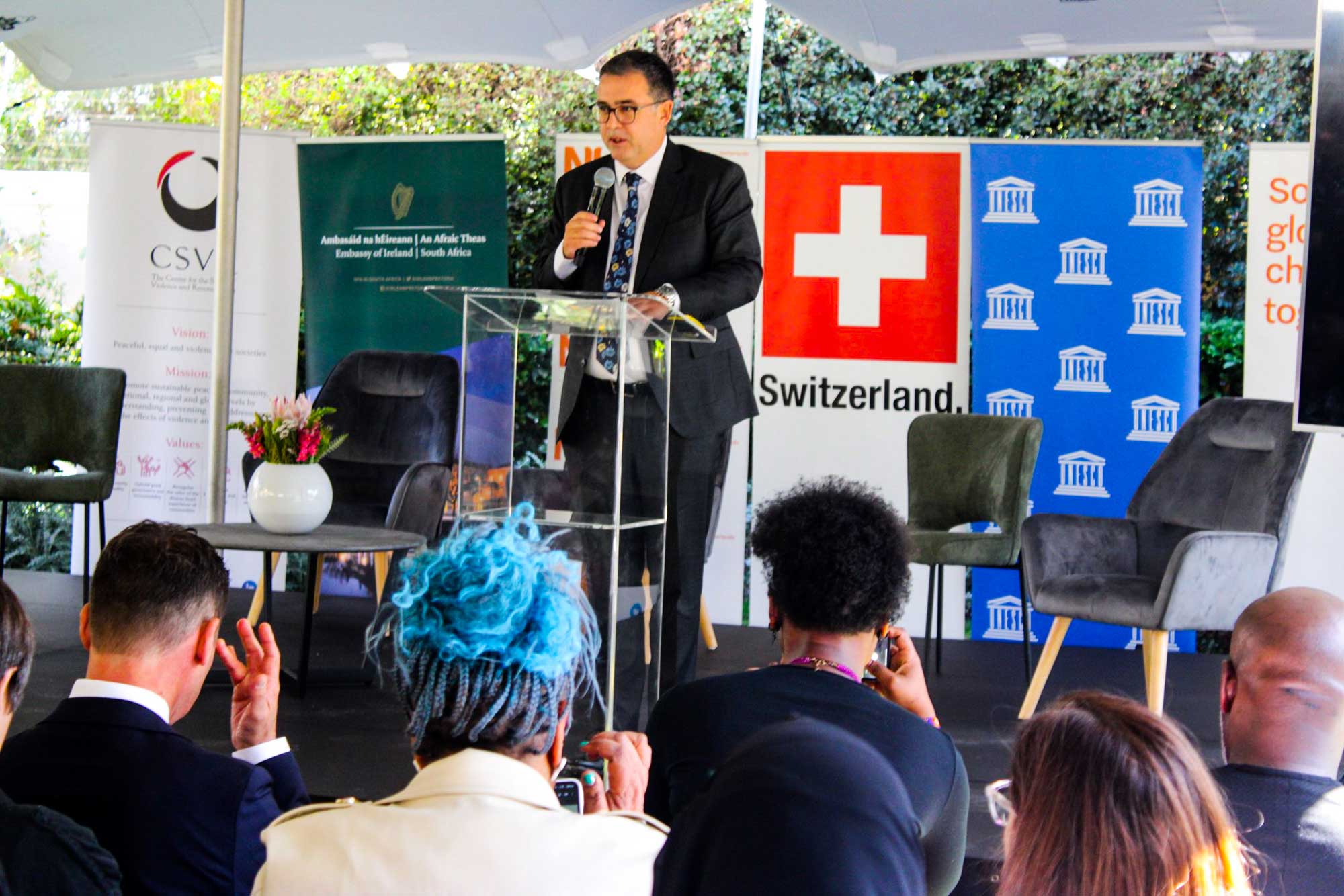
The GBV Prevention Forum is one of the most significant annual events at CSVR, which convenes various stakeholders from the Southern African region to share lessons learnt within the terrain of GBV Prevention. Concomitantly, this platform provides industry experts with the opportunity to critically reflect on gaps, blind spots and shortcomings of GBV prevention legal frameworks, policies and strategies that may need to be strengthened.
Despite shifting priorities – the decline and precarity of funding for GBV-related programs –the forum remains committed to advocating for GBV policies in efforts to end violence against women and children.
The evolving nature of GBV compels us to inclusively critically engage other notions of violence, such as constructions of violent/toxic masculinity, technology-facilitated gender-based violence (TFGBV), and harmful cultural practices, and furthermore, while diving deeper into innovative solutions.
Participants will include government officials, representatives of CSOs, CBOs, NGOs, legal professionals, community leaders, gender rights advocates, human rights defenders, and country representatives from Zambia, Zimbabwe, Mozambique, Eswatini, Botswana, Lesotho, South Africa, Angola, and Malawi.
The GBV Forum is an opportunity for industry peers and organisations to connect and advocate for GBV Prevention. With its interactive circles, thematic breakout rooms and workshops, the forums allow for learning and intimate professional connection.
Moving away from traditional panels, the forum will incorporate dialogue circles where participants sit in small groups to discuss specific topics. These should include hands-on, participatory workshops where participants can learn practical skills.
A set of policy recommendations.
Practical recommendations/ collaborative framework to improve the coordination of GBV prevention initiatives.
An action roadmap to facilitate follow-up on the agreed action plan from the symposium
A comprehensive report outlining strategies to scale up successful GBV interventions.



Moderator: Liezelle Kumalo, CSVR
E. Austin Gormley, Ambassador of Ireland, South Africa.
H.E. Jock Geselschap, Deputy Ambassador of the Kingdom of the Netherlands, South Africa
Marino Cuena, Chargé d’Affaires, Embassy of Switzerland, South Africa
Emily Enright, Second Secretary, Australian High Commission, South Africa
Alice D. Kanengoni, CEO, Southern Africa Trust (The Trust)
Annah Moyo, Executive Director, Centre for the Study of Violence and Reconciliation (CSVR)
Fortune Mgwili-Sibanda, Director of Public Policy & Government Relations for Sub-Saharan Africa at TikTok
Building Bridges and Strengthening Collaboration Efforts
Lethabo Motloung
Mental Health and Psychosocial Support Practitioner, CSVR
Moderator: Nangamso Kwinana, African Monitor
Peggie Ramaphane, Executive Director, Women Against Rape (Botswana)
Libuseng Agnes Malephane, Project Manager, Advision Lesotho
Farida Ryklief, Director, Women Impacting a Nation (South Africa)
Maria Jose Matonse, Program Assistant, MULEIDE (Mozambique)
Tamburai Muchniguir, Director Family Support Trust (Zimbabwe)
Questions and Answers
Moderator: Thabsile Mabezane, Lebo Basadi Foundation
Namuchana Mushabati, Head of Programmes, WilDAF (Zambia)
Mable Chawinga, Community Mediator, FEMWISE
Lindiwe Nana Dlamini, Director, MOET
Yvonne Ortman, DIWIO, Namibia Police
Questions and Answers
Transformative Care Economy Analysis in southern Africa
Janet Mudzviti
Moderator: Joy Watson, Consultant, Institute for Security Studies
Advocate Tarisai Mchuchu-MacMillan, Executive Director, MOSAIC
Sally Ncube, Regional Representative, Equality Now
Hannah Kisyombe, Gender Officer, Ministry of Gender, Community Development and Social Welfare
Itumeleng Magoai, Programme Manager, Foundation for Human Rights
Isheanesu Chirisa, National Director, Women and Law in Southern Africa
Breakout Room (10:20 -11:00):
Interactive dialogue circles on how to take innovative approaches forward to obtain justice for survivors of GBV
Moderator: Nomgqibelo Mdlalose, World of Impact
Panel 1: Education Challenges
Debaneigh Jordaan, Coordinator, Masifunde
Zizipho Mtwesi, FAN
Dululu Hlatsaheni, National Programme Manager, DBE
Questions and Answers
Moderator: Chengetai Kanyangu, The Trust
Panellists (Network of Young People against GBV in Tertiary Institutions):
Nthila Kalaba (South Africa)
Michelle Asante (Malawi)
Gabsile Ndukuya (Eswatini)
Tshepo Mothudi (Botswana)
Questions and Answers
Moderator: Dieketseng Diale, Founder and CEO, Lady of Peace
Rikky Minyuku, Director, WomaNiko
Dr. Tirhani Manganyi, Programmes Manager, GBVF Response Fund
Aulline Chapisa, Country Director, Christian Aid
Gugushe Konehali, Head of Social Investing FirstRand Empowerment Fund
Kulani Mathebula, Programme Coordinator, UN Global Compact Network South Africa
Question and Answer
Moderator: Denese Reddy, Girl Effect
Jacinta Kazenzi, Founder, She’s Safe (Technology reporting of GBV)
Sabrina Walter, Executive Director, Women For Change (Power of Social Media)
David Kogola Odongo, Executive Director, Mikeda Youth Empowerment Organization (leveraging Technology for GBV prevention)
Tafadzwa Madondo, IPAS (Using a digital app for the prevention of violence amongst adolescent young women aged 15-18years)
Showcasing Breakout Rooms: (10:30 -11:00)
Breakout rooms for various showcases of technology tools
Moderator: Philiswa Mashiyi, Callas Foundation
Bigadier Tsotetsi, SAPS Jabulani
Aneeqa Abrahams, Founder, BroCode
Kabelo Tsiang, Coordinator, Ministry of Youth and Gender Affairs
Moloko Dzombe, Youth Coordinator, Daily Infinity Profits
Questions and Answers
The Southern Africa Trust works to amplify the voices and agency of marginalized populations in regional policy-making, championing efforts to reduce poverty and inequality in southern Africa. Their Gender Justice initiatives actively strengthen civil society alliances focused on gender equity at both national and regional levels. A powerful example is their GBV Dialogue on Tertiary Institutions, hosted in partnership with the Netherlands Embassy and the Ford Foundation, which convened student activists from across Southern Africa to tackle GBV on campuses and launch a regional tertiary-level GBV prevention network byfostering collaboration across borders and creating accountability mechanisms. SAT hashelped redefine institutional norms and build collective action against GBV.
The Ford Foundation is a globally recognized philanthropic organization committed to dismantling systemic inequality. Its international Gender, Racial, and Ethnic Justice strategy emphasizes support for women and girl-led organizations in the Global South, focusing on prevention of GBV, centering survivors, and addressing intersectional power structures In Southern Africa, the Foundation contributes significant resources and technical support to the Gender-Based Violence and Femicide Response Fund in South Africa in efforts to strengthen survivor services and address challenges like forensic backlogs that impede justice
The Australian Embassy in South Africa integrates gender equality as a foundational principle of its foreign policy and international development work. The High Commission in Pretoria actively promotes gender equality across its engagement in Southern Africa, embedding women’s rights and GBV prevention into its aid and diplomatic initiatives.Through inclusive development policies and events like International Women’s Day celebrations, the Embassy emphasizes empowering women, encouraging male allyship, and advancing egalitarian norms, both locally and regionally.
While the Netherlands Embassy supports a wide range of social justice and human rights efforts, its partnership in GBV prevention programming stands out. Notably, they collaborated with the Southern Africa Trust and Ford Foundation to host the multi-country dialogue on GBV at tertiary institutions, positioning them as key supporters of regional GBV advocacy and student-driven solutions. Through such engagements, they contribute to nurturing cross-border coordination and elevating the gender justice agenda.
The Embassy of Ireland has a longstanding commitment to ending gender-based violence through policy advocacy and civil society collaboration. They support South Africa’s National Strategic Plan on GBV and Femicide, working closely with government and civil society partners to ensure policy effectiveness at grassroots and national levels. The Embassy’s work has underscored the importance of coordinated, inclusive approaches, particularly for marginalized and rural women, affirming that Ireland’s diplomatic efforts prioritize accountability, stakeholder capacity-building, and inclusive policy influence.
Thank you for joining us at the 3rd Annual Southern Africa GBV Prevention Forum.
Your presence, insights, and commitment to ending gender-based violence made this gathering deeply meaningful. Together, we strengthened connections, shared knowledge, and affirmed our collective responsibility to build safer, more just communities.
You can download photos from the Forum at the link provided below — a small reminder of the powerful conversations and partnerships we forged